Trim the jib and the whole boat changes gear. It is the sail that sets your pointing, balances the helm, and works in concert with the main upwind.
The jib sets on the forestay ahead of the mast and works with the mainsail to generate upwind lift. The right jib improves pointing, settles the helm, and keeps the boat in its groove across a range of wind.
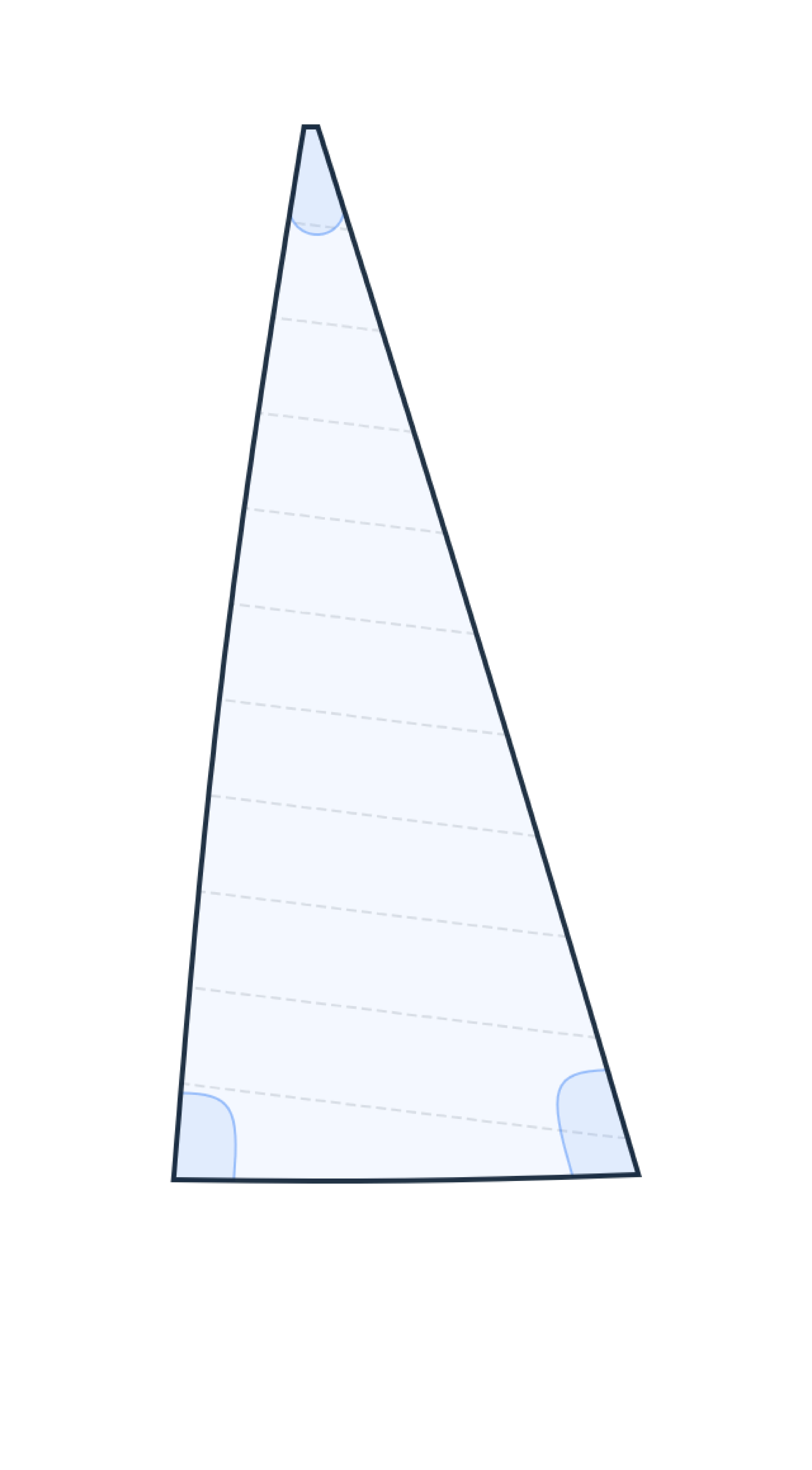
Sizing the Headsail
Headsails are sized by how far the clew overlaps the mast, measured as a percentage (the “LP”). The configurator proposes a size from your rig and how you sail.
- Working jib (≈100% or less): non-overlapping, easy to tack, the everyday choice on a fractional rig.
- Genoa (130–150%): more overlap, more power in light to moderate air — common on masthead cruisers.
- Heavy-weather jib: small and flat, built to hold shape when the breeze is up.
Configuration Options
Jib Type
- Working Jib
- Roller Furling Jib
- Self-Tacking Jib
- Heavy Weather Jib
Attachment
- Luff tape (for foil furlers)
- Hanks or soft hanks (for hank-on stays)
- Head swivel compatibility
UV Protection
A furling headsail lives rolled up in the sun. A UV cover on the leech and foot is what keeps it from cooking. See Protection Options.
- Sunbrella or acrylic UV cover
- No cover (sail bagged when stowed)
Finishing
- Telltales and reef marks
- Foam luff (for a flatter furled shape)
- Sail numbers and class insignia
- Reinforcement patches
Recommended Cloth
Specifications
Advisor Note
Most cruisers carry one furling headsail sized as a compromise; racers carry several, each cut for a wind band. Tell the configurator your priority — easy handling or pointing performance — and it sizes the jib to your forestay before sailmaker review.