When the wind goes aft, the upwind sails go to sleep. The spinnaker is what keeps the boat driving downwind — a lot of light cloth, a lot of area, a lot of speed.
A spinnaker flies ahead of the boat on reaches and runs, where its large area generates power no flat headsail can. The configurator sizes it to your boat and the wind range you sail, and helps you choose between the two families below.
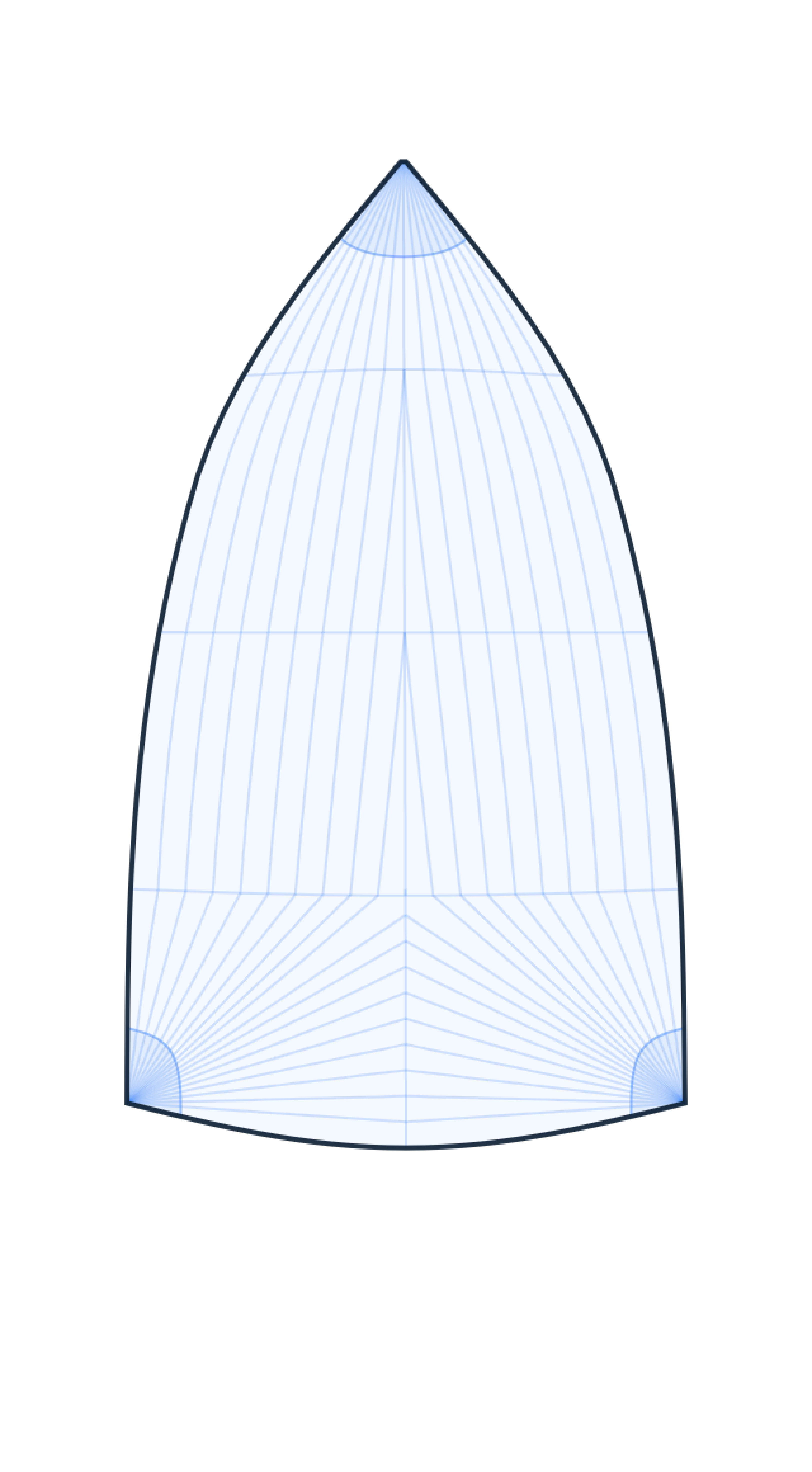
Symmetric or Asymmetric
This is the first choice, and it follows how you sail downwind.
- Asymmetric (A-sail): tacked to the bow or a sprit, gybed like a big genoa. Easier to handle shorthanded and fast on reaches — the default for most cruisers.
- Symmetric (S-sail): flown from a pole, best dead downwind. More to manage, but the deepest running angles for racing.
Configuration Options
Spinnaker Type
- Asymmetric Spinnaker (A-sail)
- Symmetric Spinnaker (S-sail)
Cloth Weight
Spinnaker nylon is chosen by the wind you expect — lighter for drifting, heavier to take a blow. The configurator proposes a weight from your boat and intent.
- Light air
- All-purpose
- Heavy air / runner
Handling
- Top-down or bottom-up furler
- Snuffer / sock
- Free flying (bag launch)
Finishing
- Reinforced head, tack, and clew patches
- Sail numbers and class insignia
- Storage bag
Where It Fits
For a furling reaching sail that is easier to live with than a full spinnaker, look at the Code Zero — it covers the tighter reaching angles where a spinnaker is hard to control.
Specifications
Advisor Note
Most cruisers are best served by an asymmetric on a furler — it gives you downwind power you will actually deploy. Tell the configurator your crew size and how deep you sail, and it will steer you between an A-sail and an S-sail before sailmaker review.