The mainsail is the engine. Everything else trims around it. Get its cloth, cut, and batten plan right and the boat is balanced; get it wrong and you fight the helm all day.
The mainsail sets on the mast and boom and carries most of the boat’s drive upwind and reaching. The configurator builds it from your boat record — rig dimensions, displacement, and the sailing style you choose — and a sailmaker confirms the spec before anything is cut.
How the Mainsail Is Cut
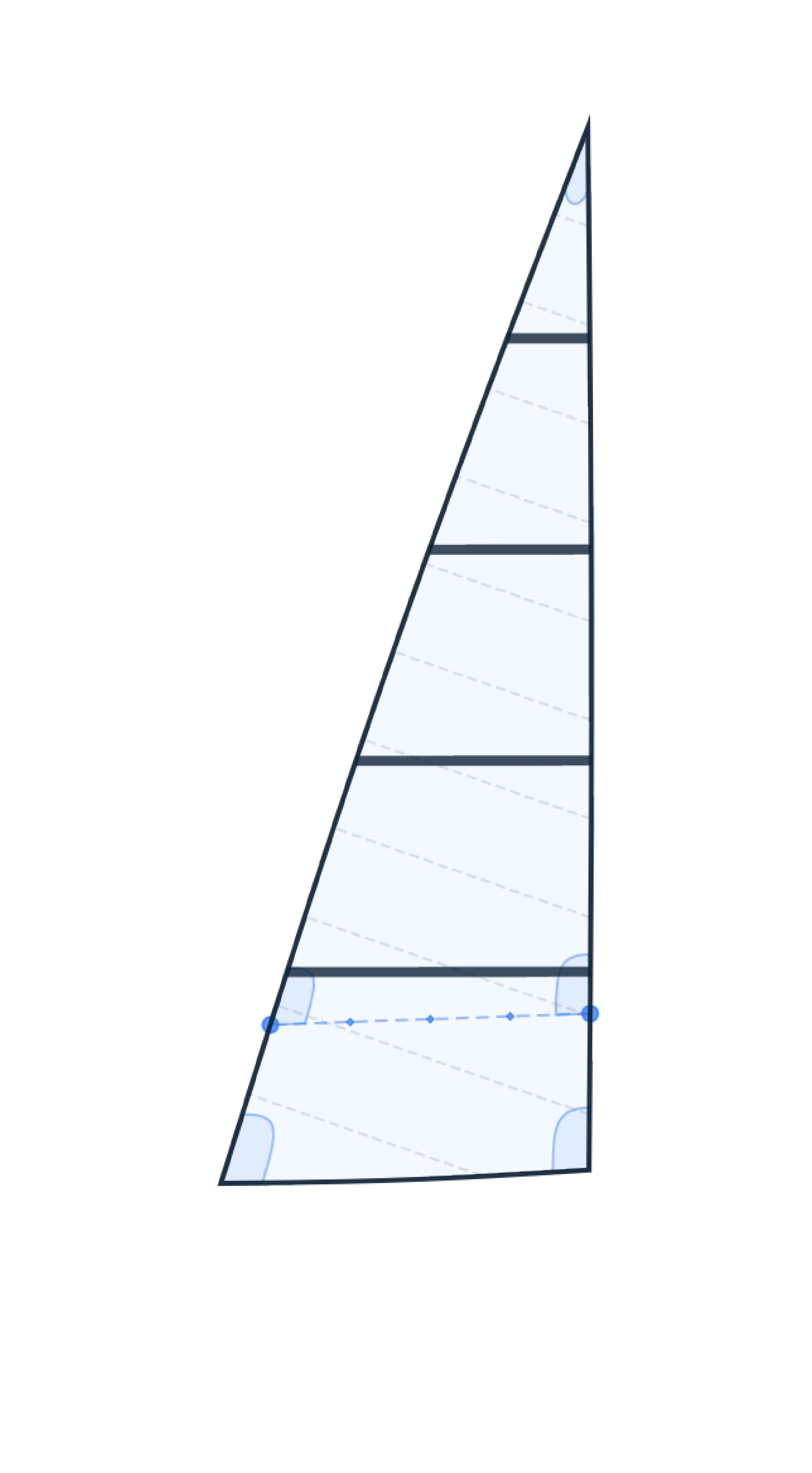
The cut decides how the cloth carries load and holds shape. The configurator offers two construction families, matched to your intent.
Cross-cut — panels run horizontally across the sail. The simplest, most durable, and most economical build. The right call for cruising, where longevity and easy repair matter more than the last fraction of pointing.
Radial — narrow panels fan from the corners along the load paths, so high-modulus fibers line up with the load. It holds shape under pressure for performance cruising and racing, at a higher cost.
- Cruising: cross-cut woven cloth — it lasts in the sun and any loft can repair it.
- Performance & racing: radial laminate — shape held under load, lighter aloft.
Configuration Options
Every option below is selectable in the configurator and confirmed at sailmaker review.
Sail Style
- Standard
- Full Batten
- Square Top
- In-Mast Furling
- In-Boom Furling
Battens
Full battens hold the roach and keep shape down into light air, and they tame leech flutter. Furling mainsails trade roach for stow-away convenience.
- Full battens
- Partial battens
- No battens
Reefing
Reef points let you reduce area as the breeze builds. The configurator sizes reef placement to your sail’s dimensions.
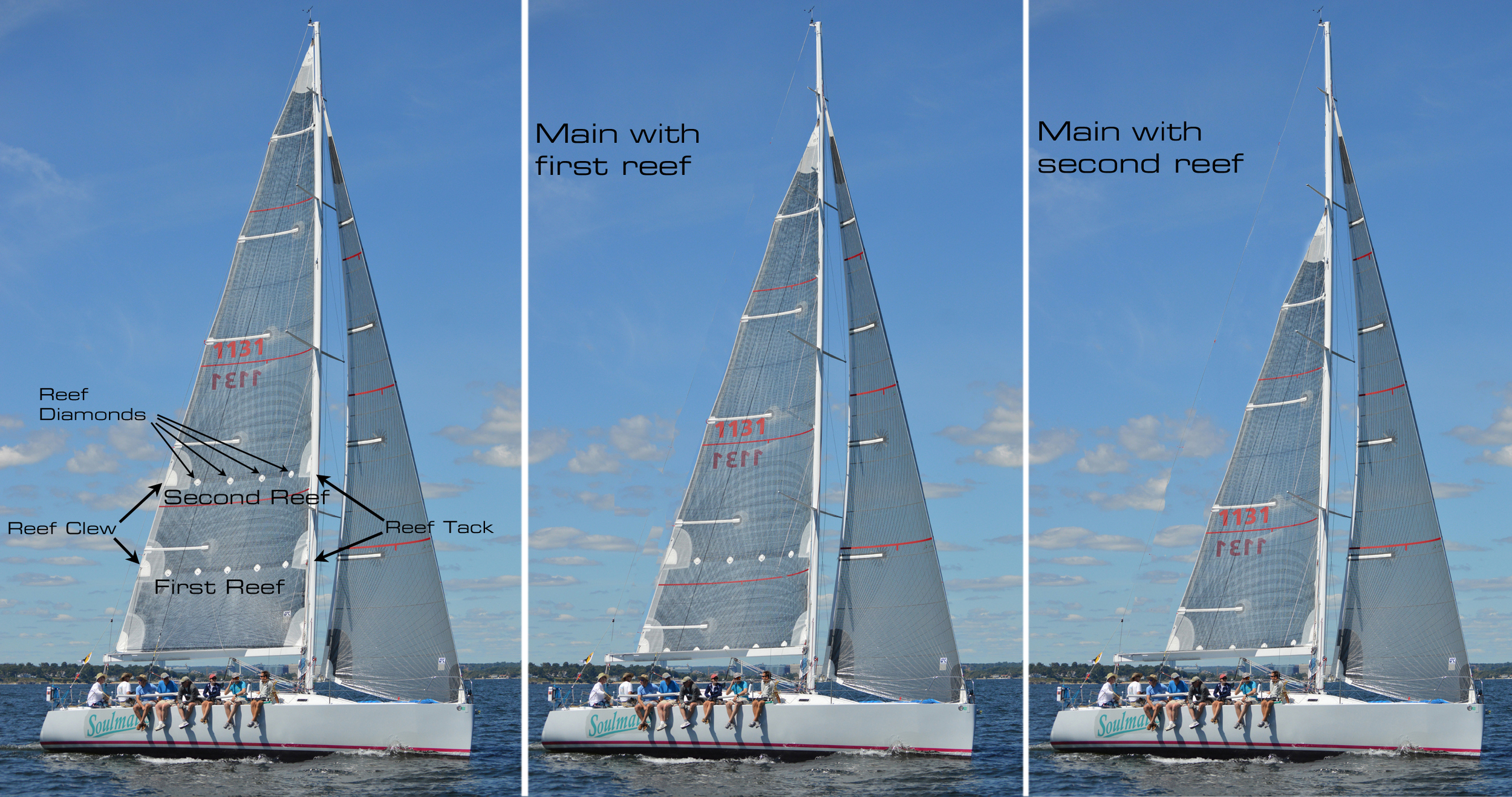
- Single, double, or triple reef
- Cunningham
- Loose foot
Finishing
- Draft stripes
- Sail numbers and class insignia
- Telltales and leech line
- Reinforcement patches
Recommended Cloth
The mainsail’s weight and intent point to a cloth family. Read each material page for the full spec.
Specifications
Advisor Note
Tell the configurator how you sail and it weighs your boat’s length and displacement before proposing a cut and cloth. A heavy cruiser may be specced with a cross-cut build and triple-stitched seams; a club racer with a radial laminate. You choose the intent — the sailmaker confirms the build. Pair this with your headsail: see the Jib.