
SurgeSails documentation
Everything we know,
written down.
How each sail works, what we build to, and what happens after it arrives. Written to be read before you decide — not looked up after something has gone wrong.
Search results
0 docs found
- Buying a sail
Buying a Sail
Configure a sail in about five minutes, then let our sailmaker review it before production.
Read guide - Owner support
Owner Support
From approving your Sail Passport to looking after the sail for years.
Read guide - Sails & gear
Sails & Gear
Five sail types, their boat interfaces and the systems that make each one work.
Read guide - Code Zero
Code Zero
The route from selecting the boat and furling system to a production-ready Code Zero specification.
Read guide - Gennakers
Gennakers
The route through the SurgeSails configurator from selecting the boat to a production-ready gennaker specification.
Read guide - Headsails
Headsails
The route from selecting the boat and luff system to a production-ready headsail specification.
Read guide - Mainsails
Mainsails
The route from selecting the boat to a production-ready mainsail specification.
Read guide - Spinnakers
Spinnakers
A direct route from the boat and intended use to a finished symmetric spinnaker specification.
Read guide - Buying a sail
Choose Your Boat and Sail
Start from your boat record, then ask AI to plan an inventory or choose one sail directly.
Read guide - Owner support
Orders, Approval and Tracking
What happens after payment, what waits for you, and where to follow the order.
Read guide - Code Zero
Boat & Intended Use
Select the boat and confirm that its sailing need and deck arrangement suit a Code Zero.
Read guide - Gennakers
Boat & Usage
Select the boat and define the wind, angles and crew the gennaker has to suit.
Read guide - Headsails
Boat and Headsail Setup
Select the boat and confirm the luff system already fitted to it.
Read guide - Mainsails
Boat and Mainsail Type
Select the correct boat and confirm the mainsail system already fitted to it.
Read guide - Sails & gear
Sailcloth
How sailcloth carries load, holds the designed sail shape, and is matched to each of the five sail types.
Read guide - Spinnakers
Boat & Usage
Select the boat and define the job the symmetric spinnaker has to do.
Read guide - Buying a sail
Configure Your Sail and Share Boat Details
Start from recommended values, make a short list of owner choices, and share the boat details that determine fit.
Read guide - Owner support
Shipping and Duties
How shipping is priced at checkout and which destination charges remain yours.
Read guide - Code Zero
Cable & Furler
Identify the furling system and its connections so the Code Zero's integrated anti-torsion cable can be built to match.
Read guide - Gennakers
A1-A5 Sail Roles
The common role names for asymmetric sails, from very-light-air sails to specialist heavy-air reachers.
Read guide - Headsails
Usage and Build Standard
Two questions set the terms for everything else: what the sail is for, and how hard a life it is going to have.
Read guide - Mainsails
Usage and Build Standard
Two questions sit behind almost every default on a mainsail: what the sail is being asked to do, and how hard a life it is going to have.
Read guide - Spinnakers
Dimensions
Use a known spinnaker specification or establish the dimensions from the boat and rig.
Read guide - Buying a sail
Price, Shipping and Payment
See the sail price while you configure, calculate shipping at checkout, and pay by local bank transfer.
Read guide - Owner support
Receiving and Inspection
Twenty minutes with the sail spread out, before it goes anywhere near the boat.
Read guide - Code Zero
Dimensions
Confirm the Code Zero outline from an existing specification or from the boat, rig and furling system.
Read guide - Gennakers
Handling Systems
Choose how the gennaker is hoisted, controlled and recovered before its final geometry is settled.
Read guide - Headsails
Dimensions, Size and Fit
Confirm the finished dimensions, overlap, clew height and every headsail interface that has to match the boat.
Read guide - Mainsails
Dimensions and Fit
The finished dimensions and every attachment have to describe the same boat. Confirm existing records, measure a suitable sail, or measure the boat when there is no sail to copy.
Read guide - Sails & gear
Upwind & Code Zero Sailcloth
How woven Dacron, panel laminate and membrane construction resist stretch and preserve the designed sail shape.
Read guide - Spinnakers
Cloth & Colours
Choose the nylon for the working range, then use the cloth panels to create the colour scheme.
Read guide - Buying a sail
Sailmaker Review and Sail Passport
A sailmaker checks the complete order, then gives you a readable Passport to confirm before production.
Read guide - Owner support
Installation and First Hoist
The first hoist is when you find out whether everything fits.
Read guide - Code Zero
Cloth
Choose the Code Zero laminate appropriate to the sail's area, load and intended use.
Read guide - Gennakers
Dimensions & Fit
Confirm the finished gennaker dimensions and the three-point arrangement from which it flies.
Read guide - Headsails
Cloth and Construction
The biggest decision on a headsail, and the one that decides how the sail sails in three years rather than in its first season.
Read guide - Mainsails
Cloth and Construction
Choose the material family; the sail's size, use and build standard determine the valid weight and construction.
Read guide - Sails & gear
Downwind Sailcloth
Why spinnakers and gennakers use coated nylon, and how weight, coating and colour set their working range.
Read guide - Spinnakers
Sail Configuration
Confirm the fittings, edge controls, labels and markings built into the spinnaker.
Read guide - Buying a sail
Production, Delivery and Receipt
Follow the approved sail through production and shipping, then check it when it arrives.
Read guide - Owner support
Using Your Sails
Sails wear out from a small number of causes, and most of them are avoidable.
Read guide - Code Zero
Sail Configuration & Finish
Confirm the Code Zero's corners, edge controls, clew fastening, markings, artwork and bag.
Read guide - Gennakers
Cloth & Colours
Match the nylon to the gennaker's working range, then design its panel colours and V stripes.
Read guide - Headsails
Furling Features
The protection, shape control and repeatable settings that follow from a headsail rolling around the forestay.
Read guide - Mainsails
Battens
The one choice on a standard mainsail that has to be made rather than accepted, because everything on the luff follows from it.
Read guide - Sails & gear
Panel Layout & Load Paths
How cross-cut, radial and membrane construction place material where the sail carries load.
Read guide - Spinnakers
Dousing Sock & Bag
Choose whether the spinnaker needs a dousing sock and the bag used to launch and stow it.
Read guide - Buying a sail
Which Sails Do You Need
Let AI propose a complete sail inventory for your boat, or go straight to the sail you already know you need.
Read guide - Owner support
Cleaning, Drying and Storage
Most of sail care is one habit: dry before stowing.
Read guide - Code Zero
Code Zero Technical Reference
Geometry, luff tension, cable torsion, furling behaviour, corners and edge construction for a Code Zero.
Read guide - Gennakers
Sail Configuration
Confirm the corners, structural and control lines, tape, markings, artwork and working bag.
Read guide - Headsails
Battens and Conventional Reefing
Neither is standard on a headsail, and for most sails the answer to both is no.
Read guide - Mainsails
Reefing
Two things: how many reefs the sail should have, and what the sail has to connect to when it is reefed.
Read guide - Sails & gear
Protection Options
UV covers, chafe patches and edge protection — where a sail actually wears out, and what stops it.
Read guide - Spinnakers
Spinnaker Technical Reference
Geometry, shape, panel layout, corners and edge structure for a symmetric spinnaker.
Read guide - Buying a sail
Measuring and Photographing
This is the part that means going to the boat.
Read guide - Owner support
Inspection and Maintenance
Nearly every serious sail failure was visible as a small problem first.
Read guide - Gennakers
Gennaker Technical Reference
Luff curve, shoulders, half width, radial panels, corners, reinforcement and handling-system effects.
Read guide - Headsails
Look, Markings and Chafe
What goes on the surface, and the patches that go where your rig rubs against the sail.
Read guide - Mainsails
Look and Markings
What goes on the surface, and the chafe patches that go where the rig touches the sail.
Read guide - Sails & gear
How Our Sails Are Built
The shared construction principles behind every sail, and what changes between Standard and Heavy-Duty builds.
Read guide - Buying a sail
Your Sail Passport
The document you confirm before your sail is built, and the record that stays with it afterwards.
Read guide - Owner support
Repairs and Alterations
What to do at sea, what can wait until you are home, what needs a loft, and what should not be attempted at all.
Read guide - Headsails
Storm Jibs
Not a small headsail — a piece of safety equipment with a different job and a different construction.
Read guide - Mainsails
In-Mast Furling Mainsails
An in-mast mainsail is shaped by one requirement: it has to roll into a slot in the mast and come back out again, every time, without jamming.
Read guide - Owner support
Warranty and Support
The two-year warranty, how to contact us and how a problem is resolved.
Read guide - Sails & gear
Sail Graphics, Logos & Markings
How custom logos, class insignia, sail numbers, and downwind graphics are configured, produced, and priced.
Read guide - Mainsails
In-Boom Furling Mainsails
An in-boom mainsail rolls up inside the boom around a horizontal mandrel.
Read guide - Headsails
Headsails: Technical Reference
The same subjects as the main headsail guide, at the depth a designer works at, organised by part of the sail rather than as a sequence, because it is written to be used as a…
Read guide - Owner support
My Sails and Sail Passport
The permanent record for each finished sail.
Read guide - Mainsails
Storm Trysails
A trysail replaces the mainsail when the mainsail should not be up — including when it cannot be lowered or has been damaged.
Read guide - Headsails
Size, Overlap and Shape
The foretriangle bounds a headsail without defining it.
Read guide - Owner support
Lazy Cradles and Covers
A mainsail that drops into its cover without a fight gets used more, gets covered more, and lasts longer.
Read guide - Mainsails
Mainsails: Technical Reference
Geometry, rig interfaces and production details at the depth a designer or Pro-mode user needs.
Read guide - Headsails
Furlers, Foils, Luff Tapes and Hanks
The luff is where a headsail either fits the boat or does not.
Read guide - Mainsails
Size, Roach and Shape
A mainsail's outline is bounded by the rig but not defined by it.
Read guide - Headsails
Corners and Cut Offsets
Head, tack and clew on a headsail carry higher loads for their size than the corners of a mainsail, because a headsail's entire load reaches the boat through three points with…
Read guide - Mainsails
Why Mainsail Shape Is Not a Field
A short page explaining why the parameters that define a mainsail's three-dimensional shape are not offered as choices, and what we need from you instead.
Read guide - Headsails
Battens, Receptacles and Pocket Finishes
Most headsails have no battens, and that is the correct answer for most headsails.
Read guide - Mainsails
Rig Interfaces and Installation Dimensions
How the luff, foot, head, tack and clew match hardware already fitted to the boat.
Read guide - Headsails
Foam Luff and Furling Shape
What actually happens to a headsail's shape as it is rolled up, why the result is worse than the size reduction suggests, and what a foam luff can and cannot do about it.
Read guide - Mainsails
Batten Hardware and Pocket Finishes
From the batten arrangement down to the end of each pocket.
Read guide - Headsails
Reefing and Reef Marks
Two different things share the word "reef" on a headsail.
Read guide - Mainsails
Sail Controls and Production Details
Cunningham, leech and foot lines, surface protection and the production details that follow from the completed design.
Read guide - Headsails
Protection and Markings
A headsail wears out at its edges.
Read guide - Headsails
Why Headsail Shape Is Not a Field
A short page on the one thing that makes a headsail different from every other sail, and why the sail's shape parameters are not offered as choices.
Read guide
No docs found.
Try a sail type, material, measurement or a shorter phrase.

Buying a sail
The path from finding your boat to production: what you confirm, what we work out, and when the price is fixed.
3 more in Buying a sail

Sails & gear
How the five sail types divide up, and the sailcloth reference shared between them.
2 more in Sails & gear
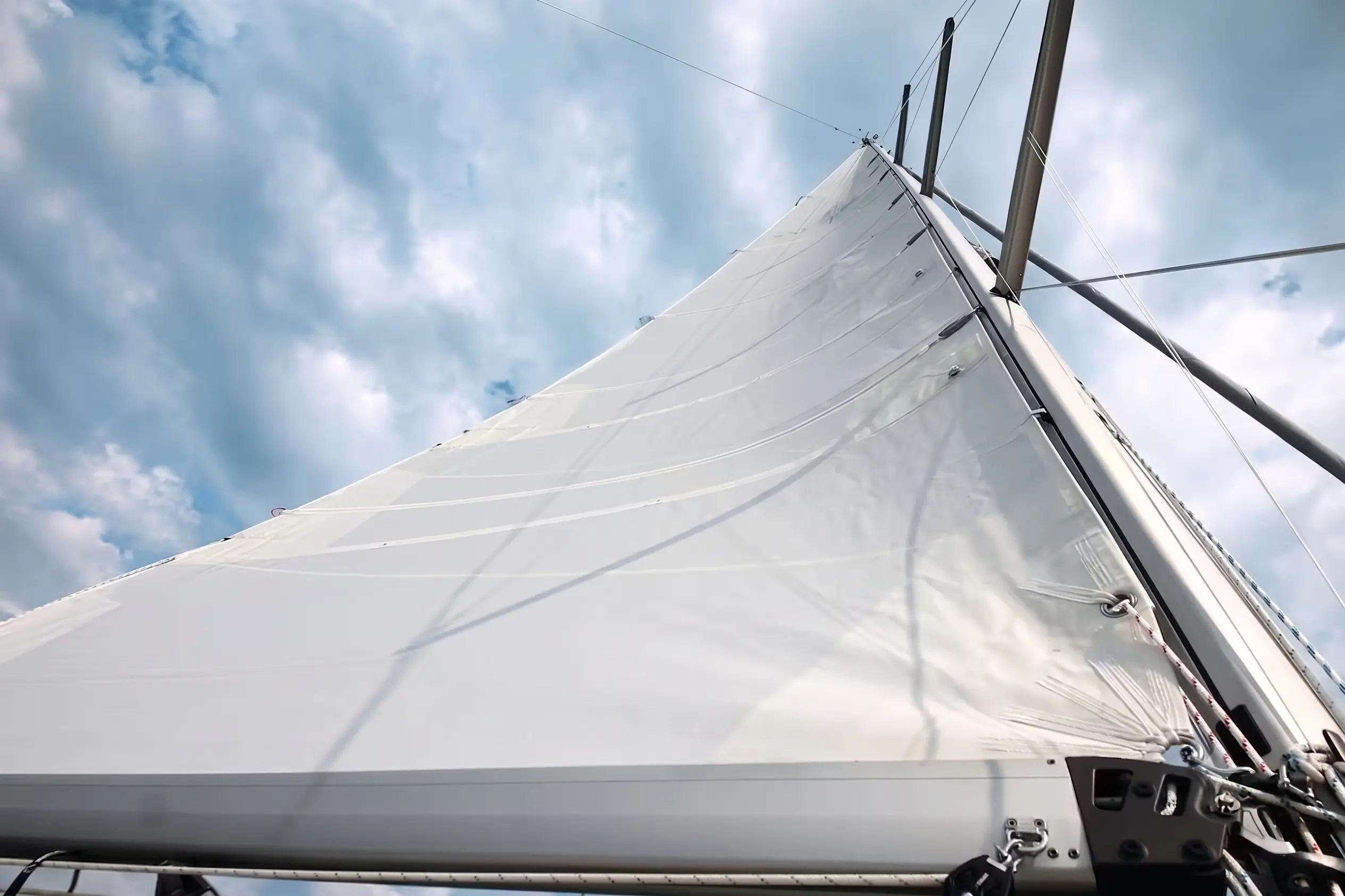
Mainsails
Standard, in-mast and in-boom are three different products. Battens, reefing, cloth and what your boat has already settled.

Headsails
Everything starts at the forestay: overlap, cloth, UV cover and foam luff, plus storm jibs.
- Overview
- Boat and Headsail Setup
- Usage and Build Standard
- Dimensions, Size and Fit
- Cloth and Construction
- Furling Features
12 more in Headsails
- Battens and Conventional Reefing
- Look, Markings and Chafe
- Storm Jibs
- Technical Overview
- Size, Overlap and Shape
- Furlers, Foils, Luff Tapes and Hanks
- Corners and Cut Offsets
- Battens, Receptacles and Pocket Finishes
- Foam Luff and Furling Shape
- Reefing and Reef Marks
- Protection and Markings
- How Headsail Shape Works

Code Zero
The furling reaching sail: the cable and furler, what your bow has to offer it, cloth, and how it is set and stowed.
1 more in Code Zero

Gennakers
The asymmetric downwind sail: handling, what we need from your boat, colours and markings.
2 more in Gennakers
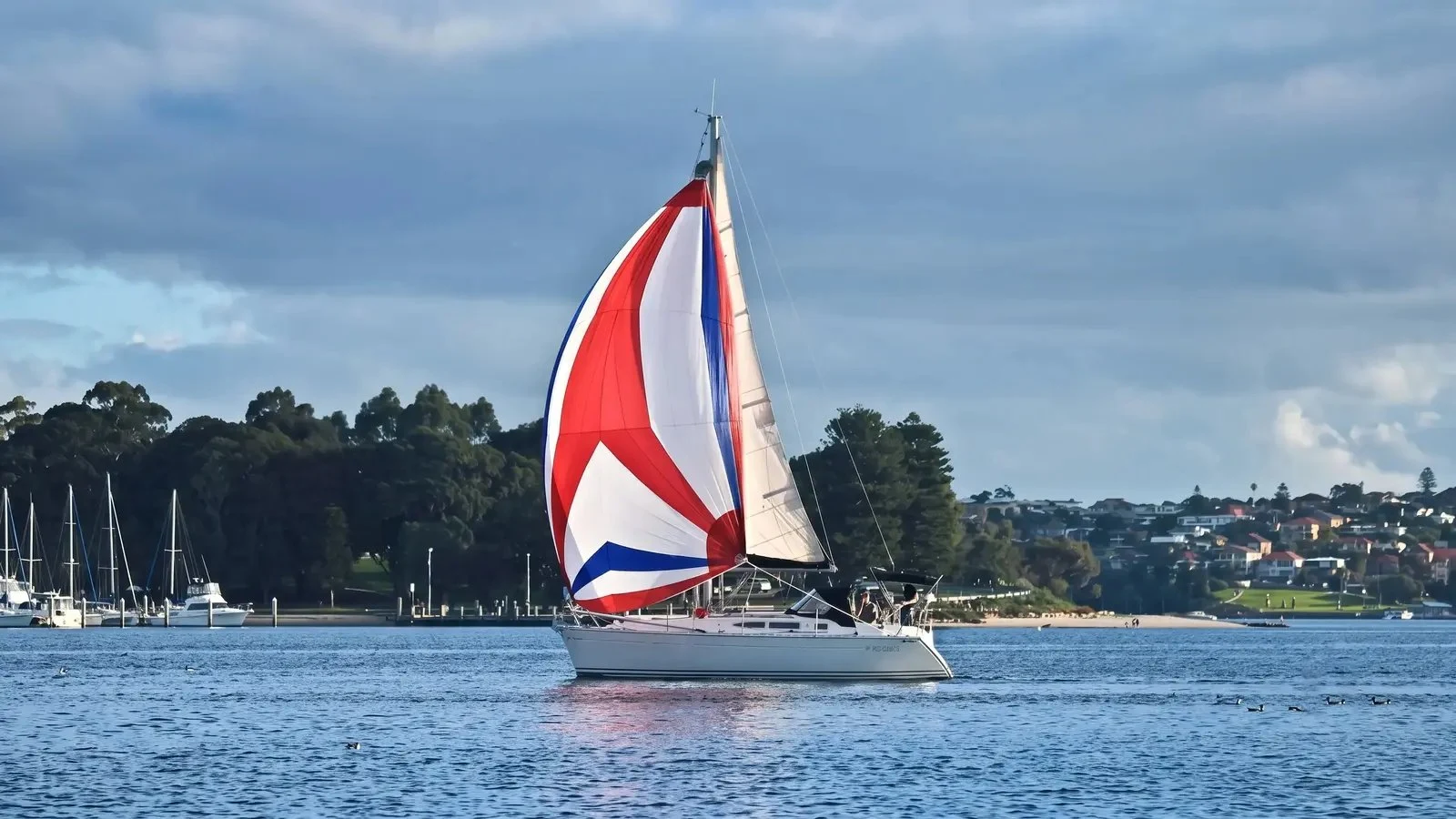
Spinnakers
What gets built into the sail, what your boat has to support, and the racing geometry behind it.
1 more in Spinnakers
Owner support
Receiving, installing, using, cleaning, inspecting and repairing your sails, plus warranty.