
Start with the boat. The configurator loads the rig data, previous sails, reports and recommendations already associated with it. Then confirm the mainsail system physically fitted to that boat.
Select the boat
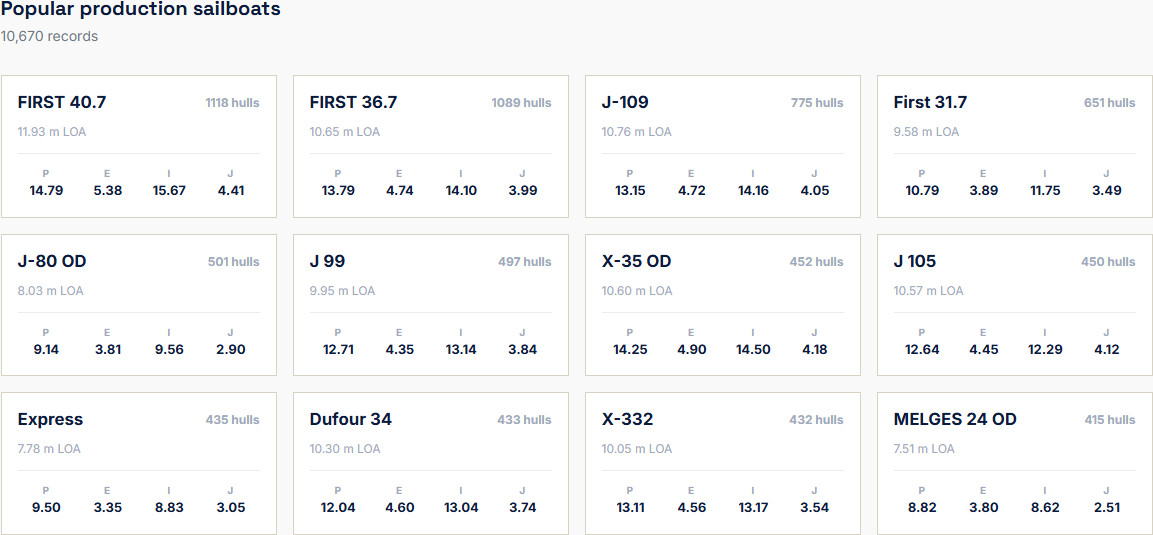
Choose from 6,800+ boat models in the boat library, then select the builder, model, year and rig variant where they are known. The configurator uses that record to create the first build.
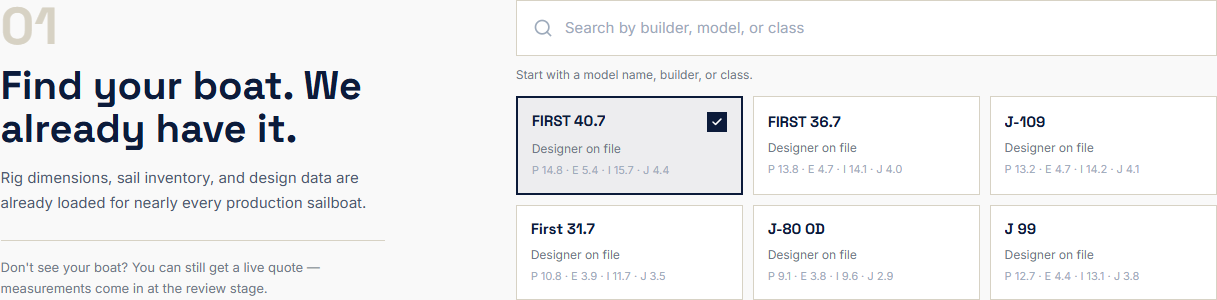
The record is a starting point, not the final authority. Masts and booms get replaced, furling systems are added, and a previous owner may have changed something without changing the model name. Confirm that the record describes the boat as it stands now.
Confirm Mainsail Type
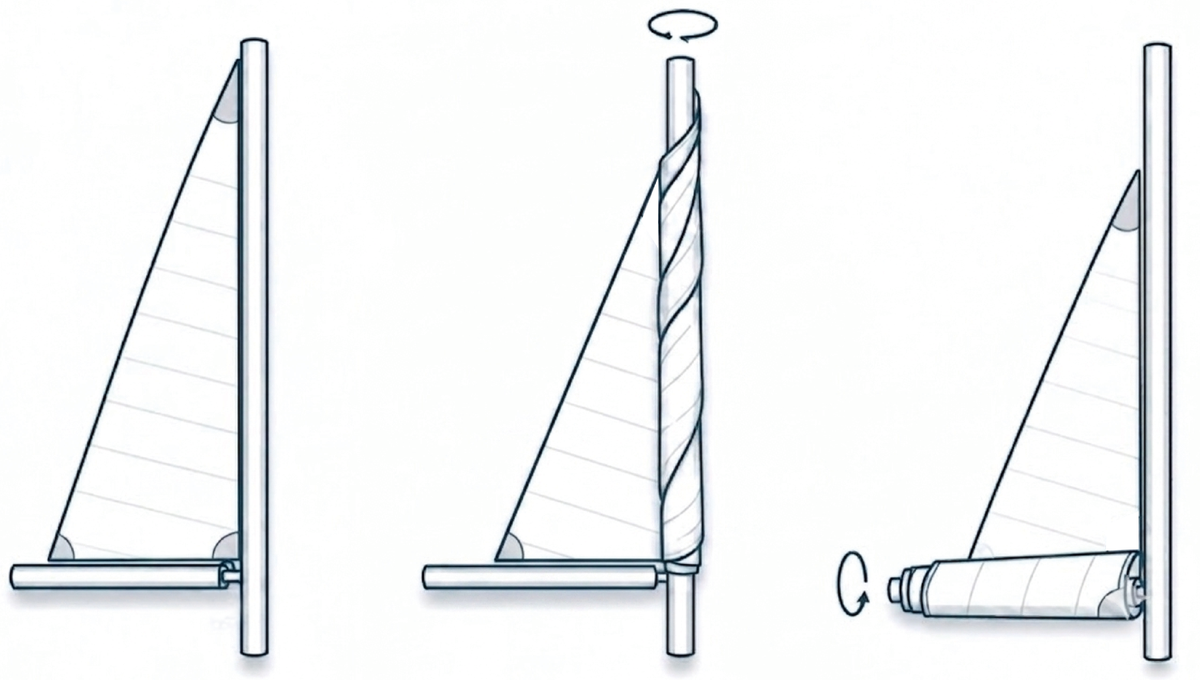
Mainsail Type is Standard, In-Mast Furling or In-Boom Furling. It is settled by the mast and boom already on the boat rather than chosen as a preference. Changing it is a rig project before it is a sail project.
The answer filters everything that follows: the available batten arrangements, whether fixed reefs exist, how much roach is possible, which controls apply and what additional information is required.
Standard mainsail
The sail hoists on a track up the back of the mast and drops onto the boom, normally into a lazy cradle. Sail area is reduced by taking a reef: pulling the sail down to a fixed point and securing a new tack and clew.
This is the system with the fewest constraints. Roach can be large or small, battens can be full, short, mixed or absent, and the reef arrangement is a design choice rather than a limitation.
In-mast furling
The sail rolls inside the mast around a vertical foil. Sail area is reduced continuously, so there are no fixed reef points.
The sail has to roll into a slot without jamming, and that requirement dictates its shape and hardware. Horizontal battens are not possible; vertical ones are. The leech is normally straight or hollow, and the clew, leech line and foot work differently from a standard main.
In-boom furling
The sail rolls inside the boom around a horizontal mandrel. It keeps a more conventional outline than an in-mast sail and must carry full battens. Each batten is also a reef position.
This is the one system that needs the manufacturer’s drawing. The sail is built to dimensions specific to the boom and boat, including batten angles, foot geometry and support-bracket position.
What each system decides
| Standard | In-mast | In-boom | |
|---|---|---|---|
| Reducing area | Fixed reefs | Continuous | Reef to a batten |
| Horizontal battens | Your choice | Not possible | Required |
| Roach | Your choice | None, usually hollow | Moderate |
| Foot line | Yes | No | System-dependent |
| Leech line | Conventional | Special routing | Small cleat, roll side |
| Manufacturer's drawing needed | No | No | Yes |
Identifying your system
If you are not certain which system is fitted, take three photographs: the mast from the side with the sail down, the boom from the side, and the head of the sail where it meets the mast.
A slot running the height of the mast with the sail disappearing into it is in-mast furling. A deep boom with the sail entering along its top is in-boom furling. A track on the back of the mast with slides or cars, and a sail that folds onto the boom, is a standard mainsail.
Continue with Usage and Build Standard.