
Furling creates three related requirements: protect the sail while it lives rolled on the forestay, control its shape when only part remains flying, and make useful reduced settings repeatable.
This page applies only where Has Furling is on. A hanked headsail has none of these features.
The UV cover
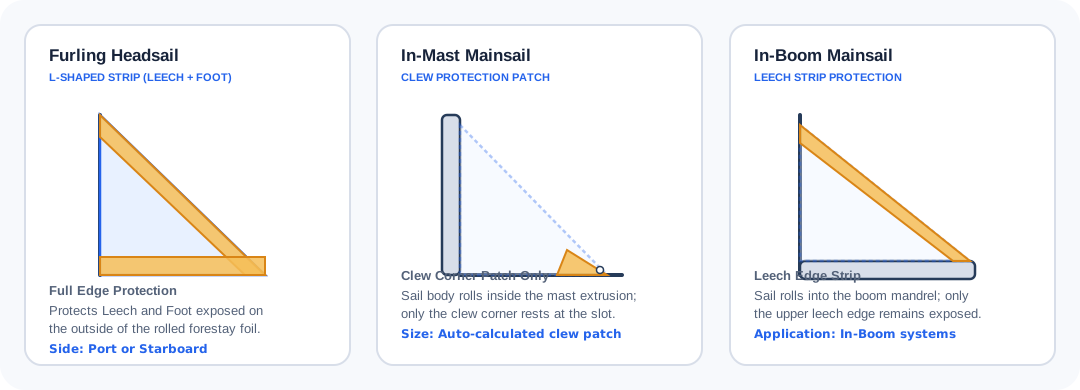
Not optional. When the sail is rolled away, its leech and part of its foot finish on the outside of the roll and take direct sun for every hour the boat is not sailing. Unprotected, a furling headsail fails along that edge — and at the stitching before the cloth.
The cover is a sacrificial strip along those edges. It takes the sunlight instead of the sail, and it is replaced during the sail’s life without replacing the sail.
Which side it goes on follows from your furler, because that is what decides which face ends up outside. If you are not sure which way yours rolls, photograph the sail half rolled and we will read it off.
Choosing the material
| Acrylic canvas | Lasts longest, widest colour choice, heaviest. The default on a cruising genoa |
| Coated polyester | Lighter, rolls more neatly, lasts well |
| UV film | Lightest, least bulk in the roll. For performance sails where a canvas strip is a real penalty |
The trade runs one way: heavier lasts longer and rolls less neatly. A genoa furled six days a week wants longevity; a sail that is set and struck each time may not.
On most boats this strip is also the largest single area of colour on deck, so it is worth choosing rather than defaulting.
The foam luff
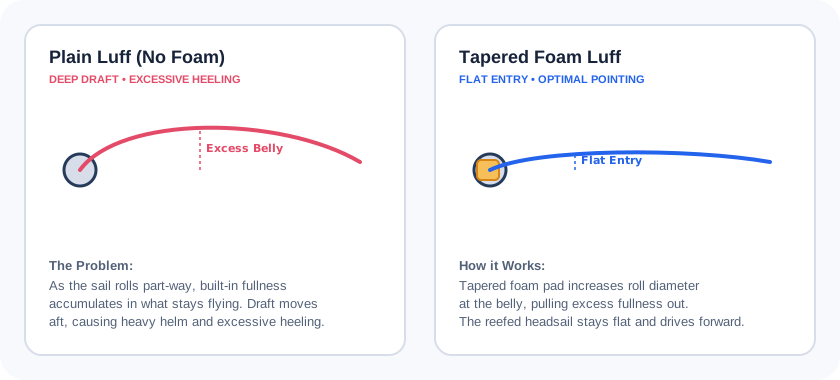
The problem it solves. Roll a genoa part-way and the area comes down, but the fullness built into the front of the sail does not — it gets rolled in with everything else and ends up spread over what is left. So the sail gets deeper at exactly the moment you wanted it flatter, which is why a half-rolled genoa heels the boat and steers badly.
What it is. A tapered foam strip built inside the luff, thickest where the sail is fullest. As the sail rolls, the thick part takes up more of each turn than the thin cloth behind it, and pulls the fullness out of what stays flying.
Worth having on any genoa regularly sailed partly rolled, which is most cruising genoas.
Less so on a small jib that is either fully out or put away, and on a racing sail never used partly furled.
What it costs. A thicker luff, so a fatter roll on the foredeck and a little more weight forward. Neither matters much on a cruising boat; both are real on a light racing sail.
The short version
If the sail lives on the forestay and gets used at every size in between, it wants both, and it wants the more durable UV material.
If it is set when you sail and rolled right away when you stop, the UV cover still matters and the foam luff matters much less.
Reef marks
A furling headsail reduces area by rolling part of the sail away. Reef marks make useful partly rolled settings repeatable: mark the sail where a known amount remains flying, and mark the corresponding sheet lead at the same time.
The marks do not carry load and are not conventional reef points. They work with the foam luff, which improves the partly rolled shape, but neither turns a deeply rolled genoa into a storm sail.
Configuring this at SurgeSails
UV Cover with UV Material and UV Color; Foam Luff and Foam Side; Reef Marks where useful.
The side for both is confirmed against your furler rather than chosen. The foam’s length and taper, and how the strip is stitched on, are set from the sail — see Protection and Markings if you want to know how.