
A gennaker has no reef. It is either flying or put away, so its handling system is part of the design rather than an accessory chosen after the sail is cut.
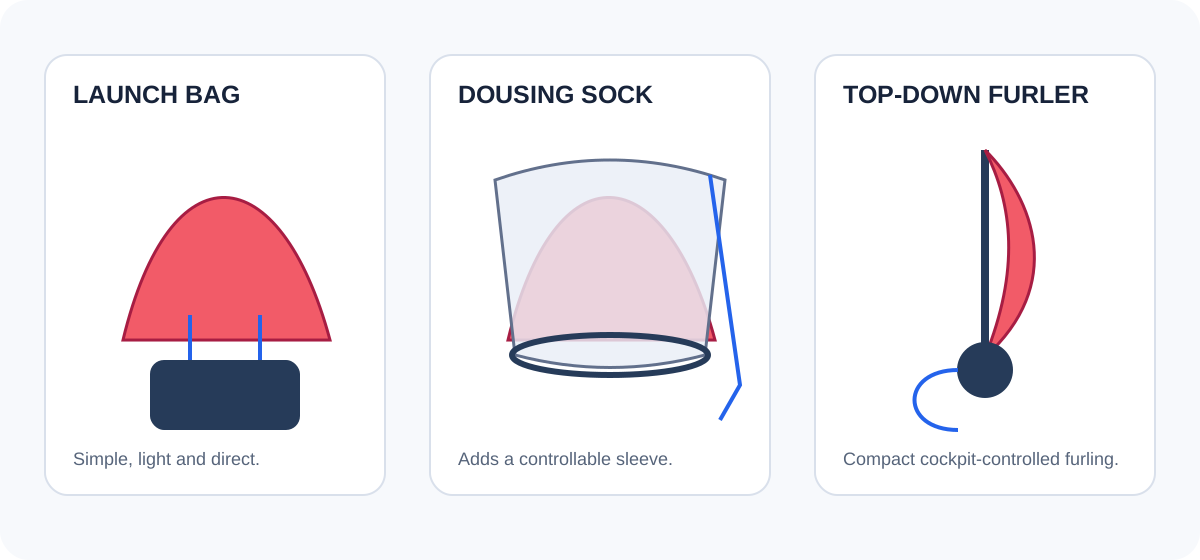
Dousing Sock: Stasher / Snuffer
A Dousing Sock, also called a Stasher or Snuffer, is a sleeve that pulls down over the sail from the head, smothering it before the sail reaches the deck.
This is the normal cruising choice because it is simple, comparatively inexpensive and does not constrain the aerodynamic cut. The customer chooses whether a Dousing Sock is required and its colour. The sailmaker sizes the length, top and bottom circumference and control line from the finished sail.
Its one operational cost is the foredeck trip needed to raise and lower the sleeve.
Using the sock
Hoist the sail while it is fully contained inside the sock, then pull the sock up to the head to expose the sail for setting. For recovery, ease the sheet, pull the sock down from the head and lower the covered sail once it is no longer filling. The control line should run freely and stay clear of the tack line, sheets, pulpit and forestay.
The customer chooses whether a sock is wanted and its colour. Length, top and bottom circumference and control-line length are engineering dimensions matched to the finished sail.
Top Down Furling
A top-down system rolls the sail from the head downward around an anti-torsion cable, with a swivel at the head and a drum at the tack. Enable Top Down Furling and record the Furler Model before the sail is designed.
It is a different sail, not an ordinary gennaker with a furler added later:
- the cut must be flatter so it rolls evenly;
- the luff is built around the cable rather than flying freely on a luff line;
- reinforcement, tapes and graphics must keep bulk under control;
- the corner geometry must clear the drum and swivel.
The system suits a short-handed boat where avoiding the foredeck is what makes the difference between using the sail and leaving it in the bag.
Retrieval Patch
A Retrieval Patch is a reinforced attachment point in the body of the sail. A retrieval line pulls from that point, collapsing the sail toward a deck hatch or recovery point instead of trying to gather it from a corner.
The configurator provides a standard Mid Body position or a Custom position. Patch location, style and layers are confirmed from the sail geometry and the boat’s retrieval path.
It belongs to a string-drop or line-retrieval workflow. A sail always recovered with a Stasher or rolled on a furler normally does not need it.
Release System
A release system keeps the sail bundled during the hoist so it cannot fill before the halyard is made off. The bundle is then opened by loading or pulling the clew.
The available types are:
- Velcro;
- Elastic Band;
- Zipper.
The customer chooses the system type. Release System Up Length, Down Length and Offset are engineering dimensions derived for the final sail and recorded in the production specification.
Rope Catcher and tack line
The Rope Catcher keeps lazy sheets, the tack line and any furling line clear of the tack area. The configurator offers no catcher, a soft catcher or a tack-batten form.
The adjustable tack line itself is boat hardware rather than part of the sail, but it is the gennaker’s main control after the sheet. Its lead and working range should be described in Note.
Choose one complete workflow
Tell us how the sail will be hoisted and recovered, not only which individual fields are selected. Stasher, top-down furling, retrieval and release systems solve different parts of the sequence and must make sense together.
The structural luff, leech and foot lines are covered in Sail Configuration.