
Two questions sit behind almost every default on a mainsail: what the sail is being asked to do, and how hard a life it is going to have. They are separate questions, and both arrive with a default that is right for most owners.
What the sail is for
A mainsail cannot be optimised for everything at once. Shape retention, light weight, service life, ease of handling and cost all pull against each other, so the first thing a designer needs is to know which one wins when they conflict.
Cruising. The sail has to hoist without a fight, reef without drama, fold into its cover, and still be serviceable in five years. Maximum area is not the objective — a cruising main that is slightly smaller and much easier to handle is the better sail, because it will actually get used the way it was designed to be.
Performance cruising. The same handling requirements, with real weight given to how the sail holds its shape as the breeze builds and what it weighs aloft. This is where the extra cost of a lower-stretch cloth starts buying something you can feel.
Racing. A defined job in a defined range, with a crew to trim it. Shape and roach become precise. Handling is still a constraint — a sail the crew cannot reef is not fast — but it is no longer the first one.
These are not quality grades. A cruising mainsail is not a cheaper racing mainsail; it is a different set of priorities.
 |
 |
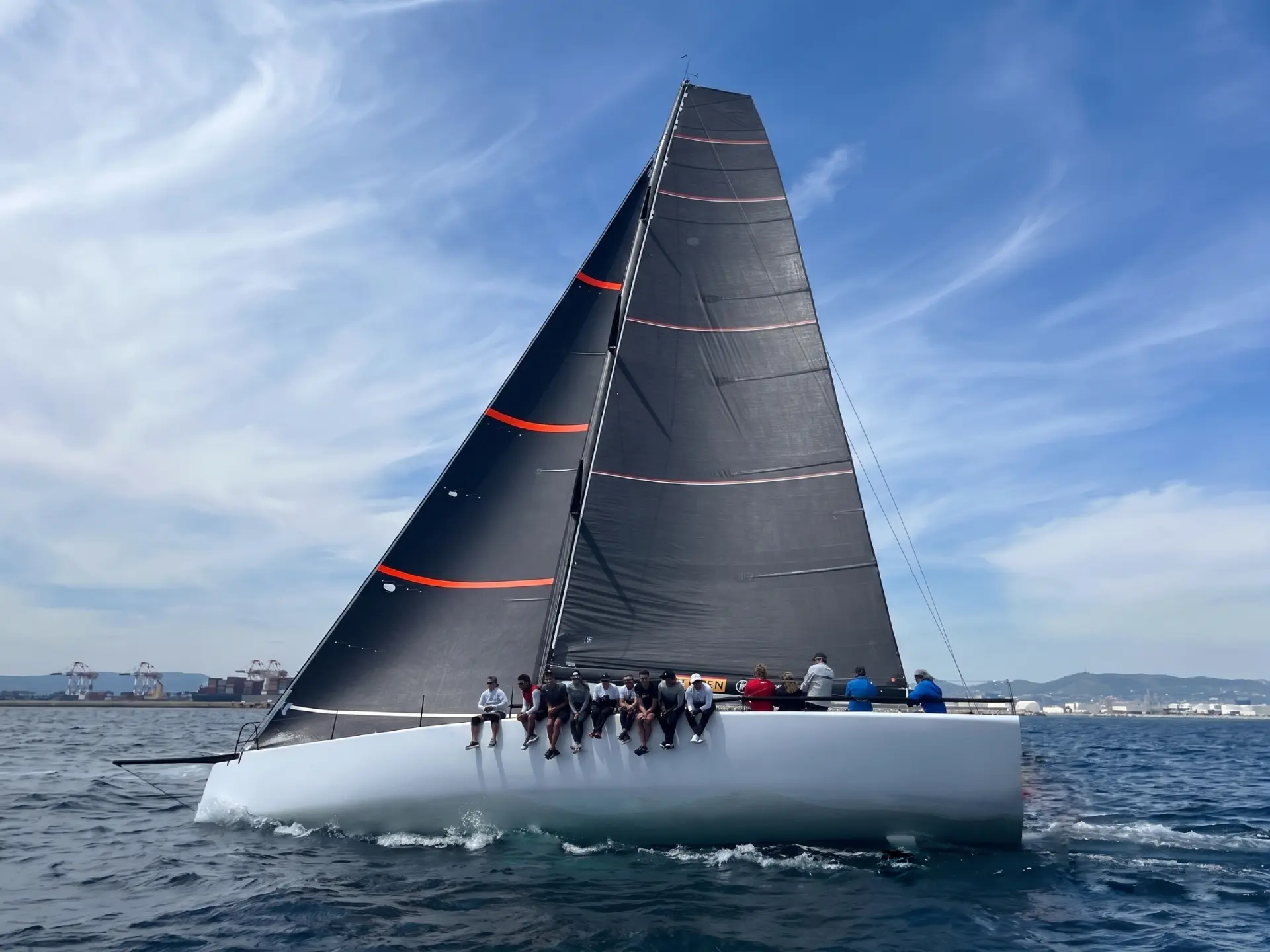 |
| CruisingEasy handling and service life come first. | Performance cruisingHandling remains practical, with more emphasis on shape retention. | RacingShape, roach and a defined working range become precise. |
How hard a life it will have
A separate axis. It describes how the sail is built rather than how it is shaped.
Standard is the normal construction for the sail’s size, cloth and use.
Heavy-Duty builds the same sail more heavily where it takes the most wear — the luff, the stitching, the tapes along the edges, the patches at the corners — and in a heavier cloth. It suits long passages, heavy weather, and years of use without a mid-season service.
Two things it is not. It is not a sailing-area certification; no such approval attaches to a sail. And it is not a general upgrade — all of that is extra weight carried high, and on a boat that never needs it, weight is simply cost.
What these two answers change
The reef count. Cruising starts at two, racing at one. See Reefing.
The cloth family and weight. Durability first or shape first, and how heavy within that.
The roach, and with it how much batten support the sail needs.
Where the extra build goes, as above.
You will see the results as ordinary readable choices. None of them asks you to calculate anything.
Configuring this at SurgeSails
Two fields near the top of the form: Usage — Cruising, Performance Cruising or Racing — and Build Standard — Standard or Heavy-Duty.
Both have defaults and for most owners the defaults are right. What they are worth is a moment’s honesty about how the boat is actually sailed rather than how it might be sailed one day.