
Two different things share the word “reef” on a headsail. One is a structural feature that turns a hanked sail into two sails. The other is a stripe of paint that solves a trimming problem. They are not alternatives to each other.
Reef marks
A furling headsail is reduced by rolling it. Nothing structural is required for that, and nothing structural is added.
What is missing is knowing where you are. A genoa rolled to some size has a clew somewhere new, and the sheet lead that suited the full sail no longer suits it. Every time the sail is rolled to a slightly different size, the correct lead position is slightly different, and it is found by trial and error each time.
A reef mark is a mark on the sail showing that it has been rolled to a known point. Marking the sheet at the matching position turns the whole thing into a repeatable setting: roll to the mark, move the car to the mark, done.
This is cheap, weightless and — on a cruising genoa that lives partly rolled — one of the most useful small things that can be specified. It also gives the crew a shared language: “second mark” is unambiguous in a way “a few turns in” is not.
Marks are usually placed at sizes that correspond to real changes in the boat’s behaviour rather than at even intervals, and they can be numbered or coloured to be read at a distance.
What they do not do is improve the sail’s shape. That is what a foam luff is for — see Foam Luff and Furling Shape. The two solve the two separate problems that rolling a sail creates, and on a sail that is regularly used partly rolled both are worth having.
Conventional reefs
A real reef in a headsail is what a reef in a mainsail is: a line across the sail, with a reinforced new tack at the luff end and a reinforced new clew at the leech end. The sail is lowered to that line, the two new corners are secured, and the cloth below is tied out of the way.
Where it belongs
On a hanked sail, where there is no other way to reduce area.
A hanked working jib with a reef gives a boat two sizes of headsail without a sail change. On a boat set up for offshore sailing that is worth a great deal: reducing sail becomes something done at the mast in a few minutes rather than a full sail change on a wet foredeck.
It does not belong on a furling sail, which already has a means of reducing area, and where the reef’s reinforced corners would be extra thickness accumulating through every roll for no benefit.
What it demands
Both new corners carry full load. As with a mainsail, the loads at a reef are often the highest the sail sees, because it is being used in more wind. Each end is built as a corner, with its own reinforcement spreading load into the body of the sail.
The reef tack has to reach its attachment. Whatever the sail’s tack attaches to, the reef tack has to be able to reach and engage the same fitting or a dedicated one, with the sail lowered and the boat moving.
The reef clew needs a lead. The reefed sail’s clew is in a different place, so the sheet has to go somewhere sensible. A reef whose clew leads to a position the boat does not have is a reef that cannot be trimmed.
Which side the reef tack sits on follows from how the sail is handled and where the fittings are, exactly as on a mainsail.
The reef points between the ends gather the loose cloth and carry nothing.
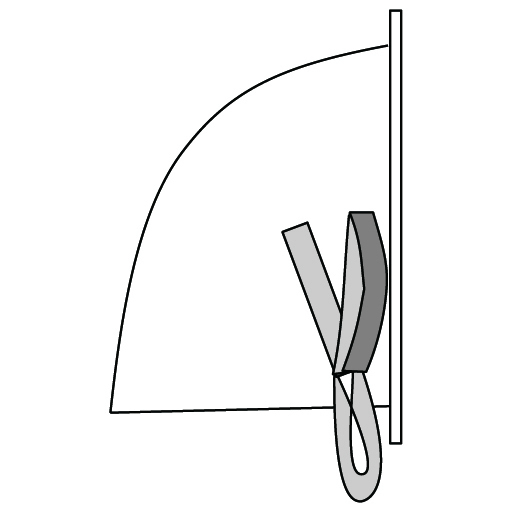
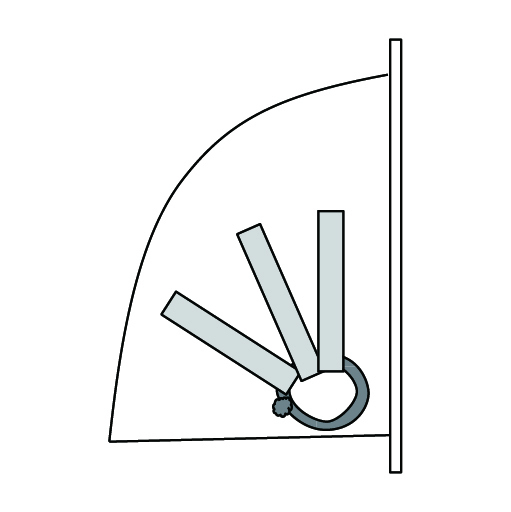
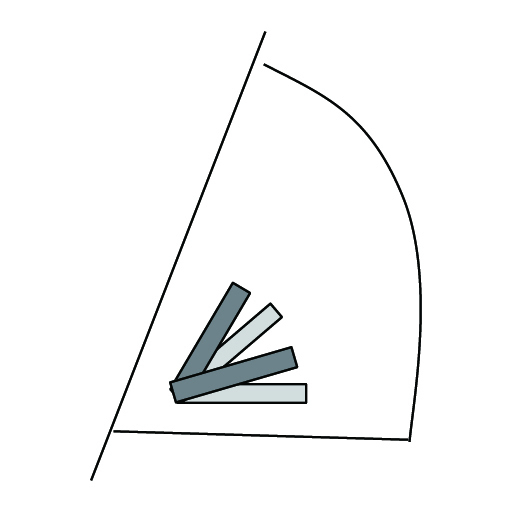
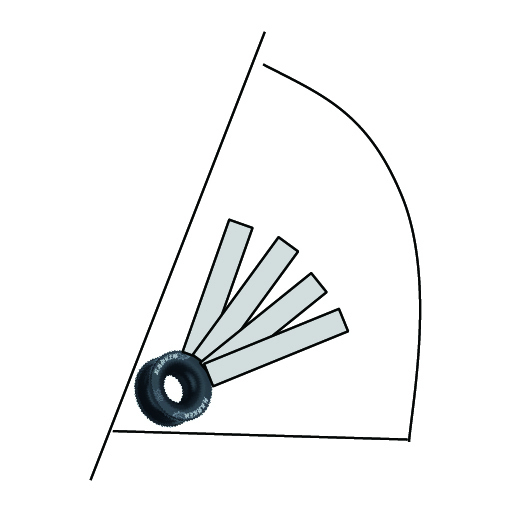
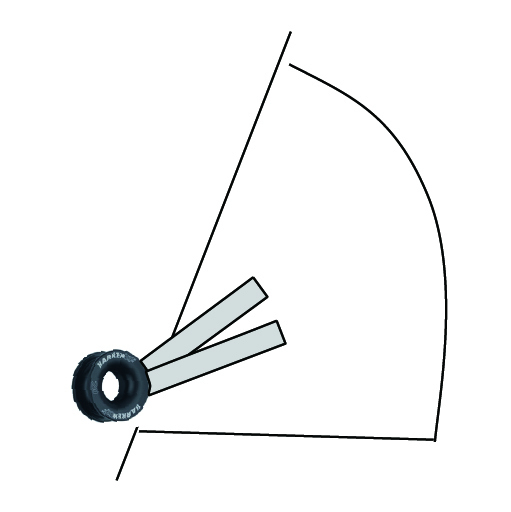
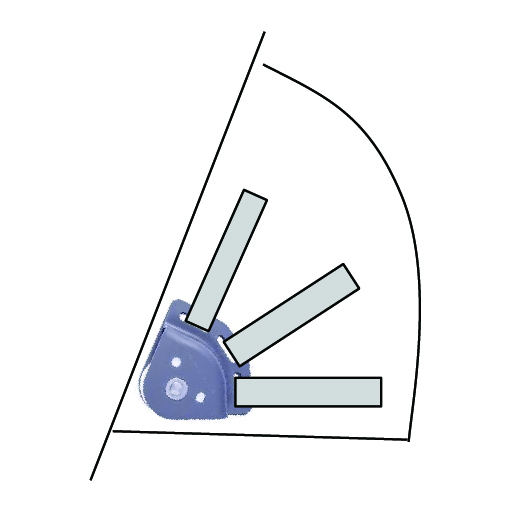
Reef tack and clew finish reference
The reef tack is a loaded luff-end finish. These drawings show the manufacturing families used when the reef arrangement is reviewed; they are not all presented as customer choices in the configurator.
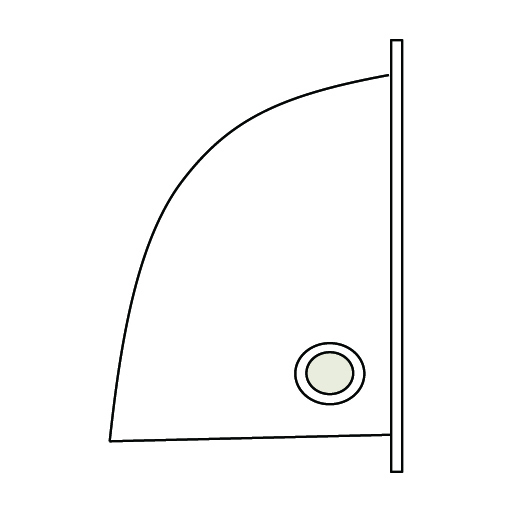
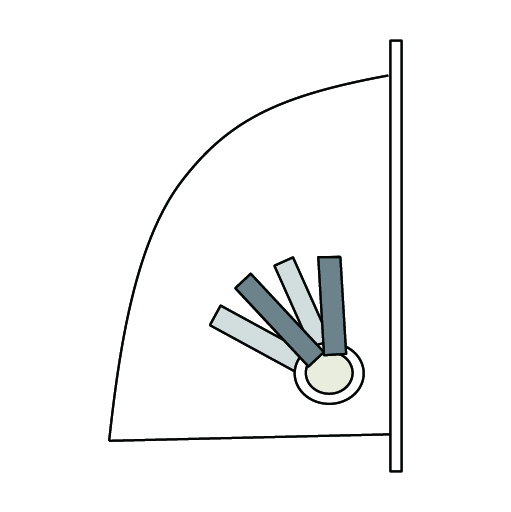
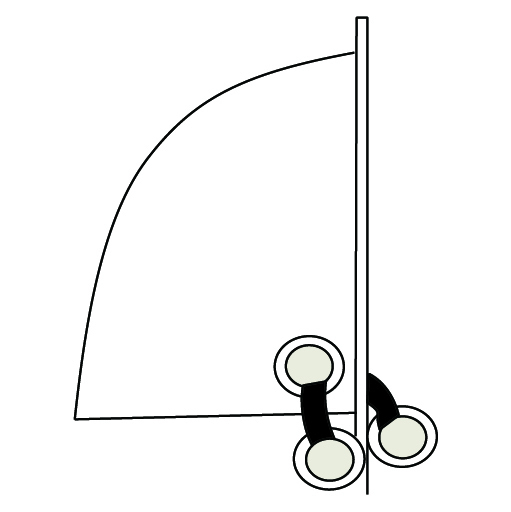
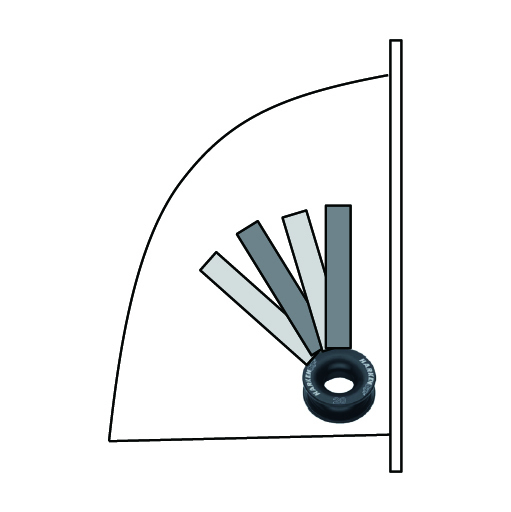
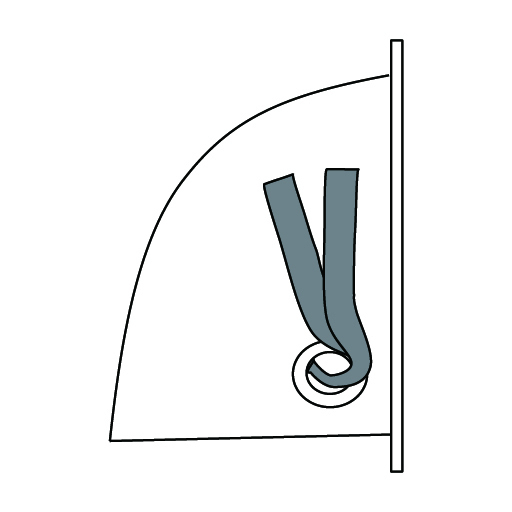
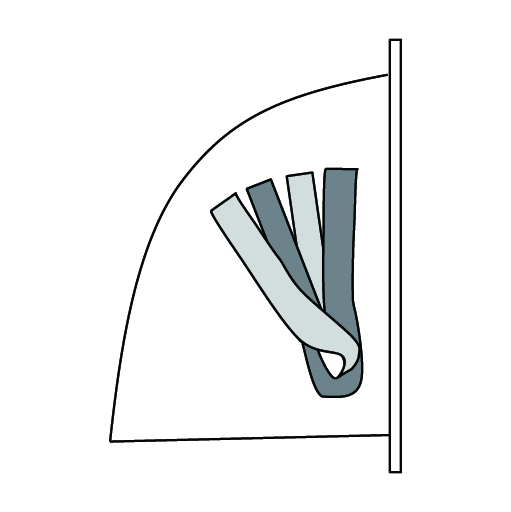
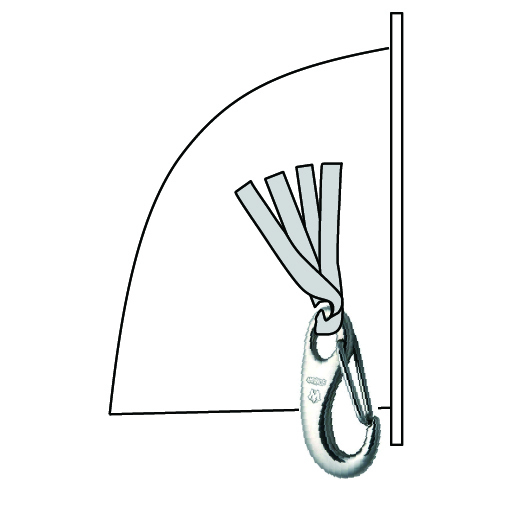
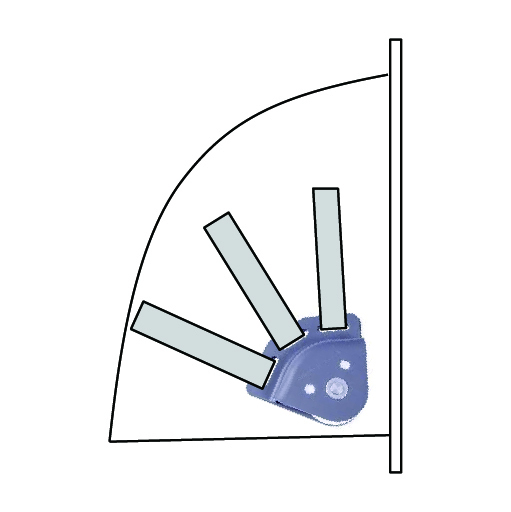
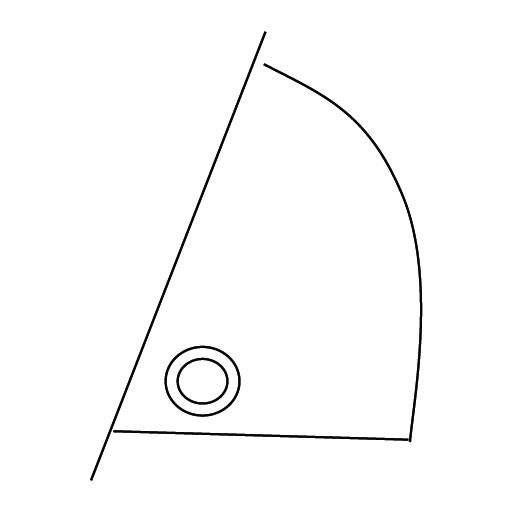
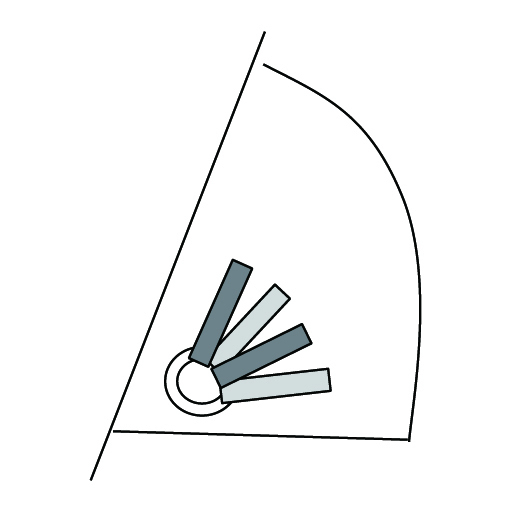
The reef clew is a separate finish family because its line approaches from the leech side.
What neither of these is
Rolling a genoa down to a small fraction of its size is not a reef. It has no reinforced corners, its shape is poor, its lead is wrong, and its load is concentrated on a sail full of turns.
There is a point past which the correct answer is a different sail — see Storm Jibs.
Configuring this at SurgeSails
Reefing Type offers none, reef marks, or a conventional reef, and it defaults to none.
Choosing a conventional reef opens the reef positions and, in the Pro view, the tack arrangement, its direction, and the ring at the reef clew.
Reinforcement, ring sizes, patch dimensions and webbing follow from the cloth, the sail’s size and the build standard, and are not configurable. If you need the reef to work with a particular fitting on your boat, photograph it and describe the arrangement in Design Note.