
A gennaker fits the complete flying arrangement: tack point, halyard exit and sheet lead. Confirm the handling system first, because top-down furling changes the geometry that follows.
Enter a known sail specification
If an existing gennaker sets well, enter its finished dimensions and send its measurement report or design drawing:
| Configurator field | Meaning |
|---|---|
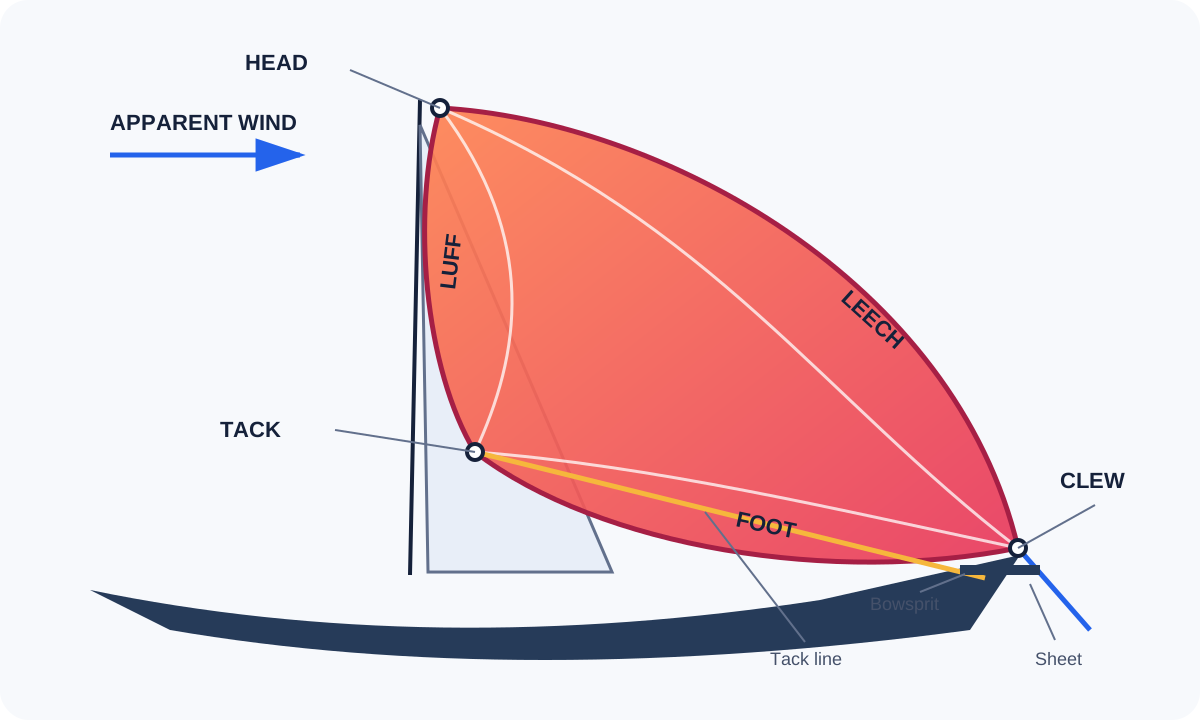
| Luff | Leading edge from tack to head |
| Leech | Trailing edge from head to clew |
| Foot | Bottom edge from tack to clew |
| Half Width | Width between the luff and leech midpoints |
The configurator calculates SHW / SFL and Pricing Area from those values. They are review results, not substitutes for the four finished dimensions.
Establish a new size from the boat
When there is no reliable existing specification, start from the correct boat record and confirm:
- the exact tack point and its height;
- bowsprit projection or the stemhead arrangement;
- the spinnaker halyard exit;
- the sheet leads and clearance around the forestay and bow gear.
The straight distance between tack and halyard exit establishes the available flying height. The finished luff and its curve are design outputs chosen for the A-role and handling system rather than copied directly from that straight-line distance.
TPS and ISP are available in the Pro view as rig references where they are known.
Photographs that resolve fit
Photograph the bowsprit fully extended from the side and above, the masthead and halyard exit, and both aft sheet leads. Show the stemhead, pulpit and anchor gear that the sail must clear.
If the boat has a foredeck hatch or a defined retrieval path, include it because it affects the handling system even when it does not change an edge length.
Sailmaker Review
The sailmaker checks the entered dimensions against the selected boat, role and handling system. A reliable existing specification is not silently replaced by database numbers; any conflict is resolved with the owner before production.